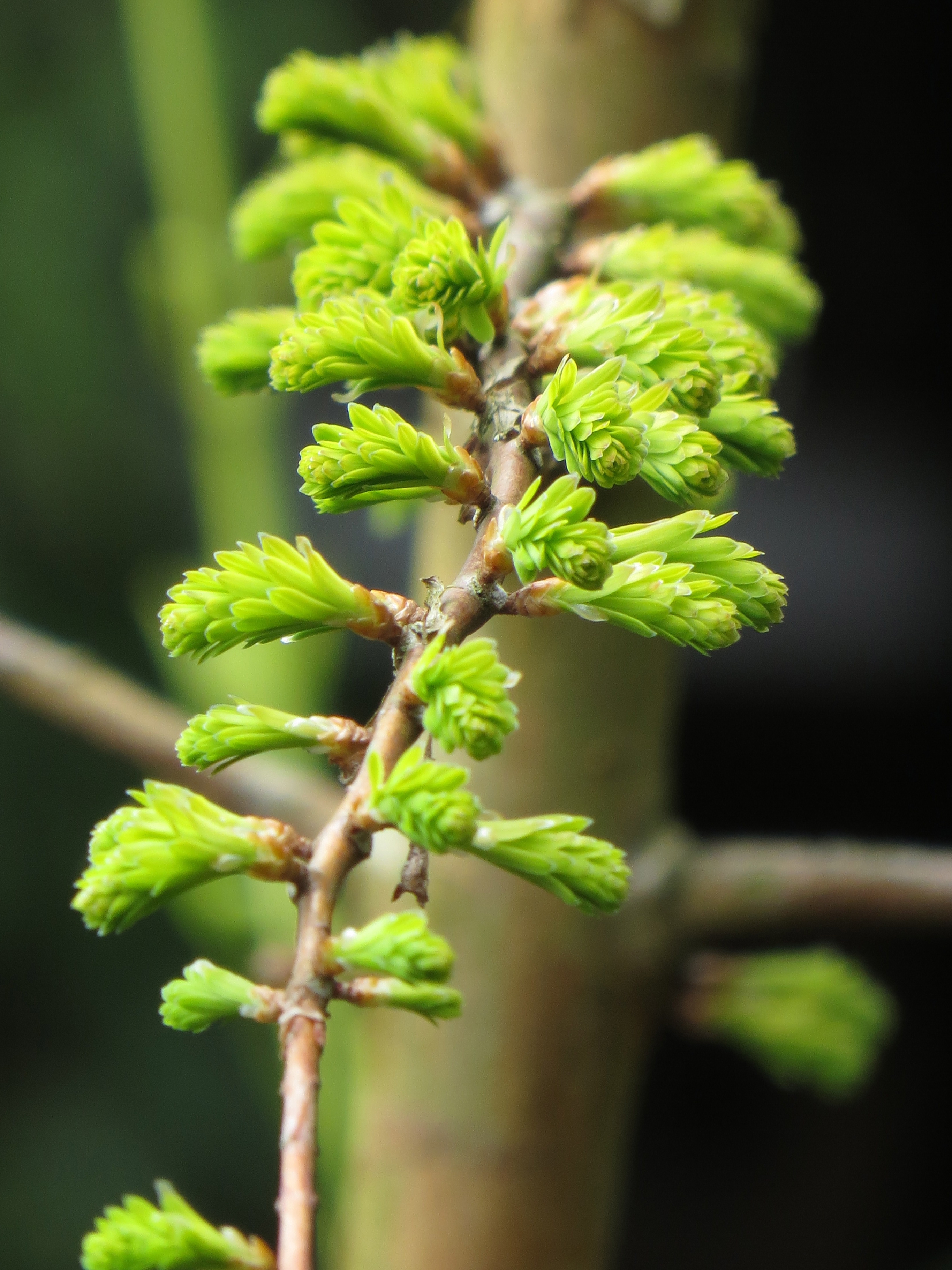
Beware, not for the average garden! The Dawn Redwood (Metasequoia glyptostroboides) is a large tree. Many trees planted in the late 1940’s are now over 100 ft tall, 25 ft wide. Rather optimistically I have this specimen in a large pot as I like the bright foliage so much but I know that it will be a brief love affair!
Quoting from Dirr’s excellent Encyclopedia of Trees and Shrubs –
The Dawn redwood was resurrected from near-extinction when a Chinese botanist discovered the plant in 1941. The Arnold Arboretum organised an expedition to collect seeds, and gardeners the world over have benefited. In youth and old age, the habit is pyramidal and feathery. The bark is reddish brown in youth, becoming darker and fissured with age and exfoliating narrow strips. The trunk becomes buttressed with maturity. The 1/2 inch long, bright green needles are borne on small branchlets. In fall the needles turn orangish brown to reddish brown. Once established, the species withstands dry soils, although it will also grow in wet soils. Plant in a sunny location. A single specimen is an imposing sight, but groupings and groves are also effective. Under ideal cultural conditions, 2 to 3 ft of vertical growth a year is common.
Gold Rush (Ogon) with yellow leaves, is attractive. Maintain an even moisture, as heat, drought, allow for photo-bleaching (whitening) and browning of needles. relatively fast growing under good cultural conditions, about 2 ft a year. Nice colour addition against green backgrounds like pines and hollies.
Other varieties include Shaw’s Legacy (dark sage green needles), Snow Flurry (white spotted needles), Nitschke Cream, Spring Cream and White Spot (cream splotched and spotted forms).
I daresay this particular plant won’t reach maturity in my suburban plot. We can but dream.


 The Teddington Gardener