A Gertrude Jekyll flower parterre, good trees and a dream-like park.
The curving path from the old orchard, now the car park, brings the eighteenth-century mansion into view at an oblique angle between the trees. In its restored state, it is a striking block of red brick and white paintwork, contrasting sharply with the parkland grass that sweeps almost to the door. The lawns are endowed with some fine trees and shrubs, notably cedars, arbutus, a huge stone pine and a magnificent London plane.

New shrubberies frame the stone temple, brought here in 1953 from nearby Busbridge Hall, and in spring, snowdrops, daffodils and bluebells abound. Fanny Boscowan’s Walk (the wife of Admiral Edward Boscowan, who built Hatchlands in the 1750’s), edged in lilac, laburnum, yew and philadelphus was recently restored.
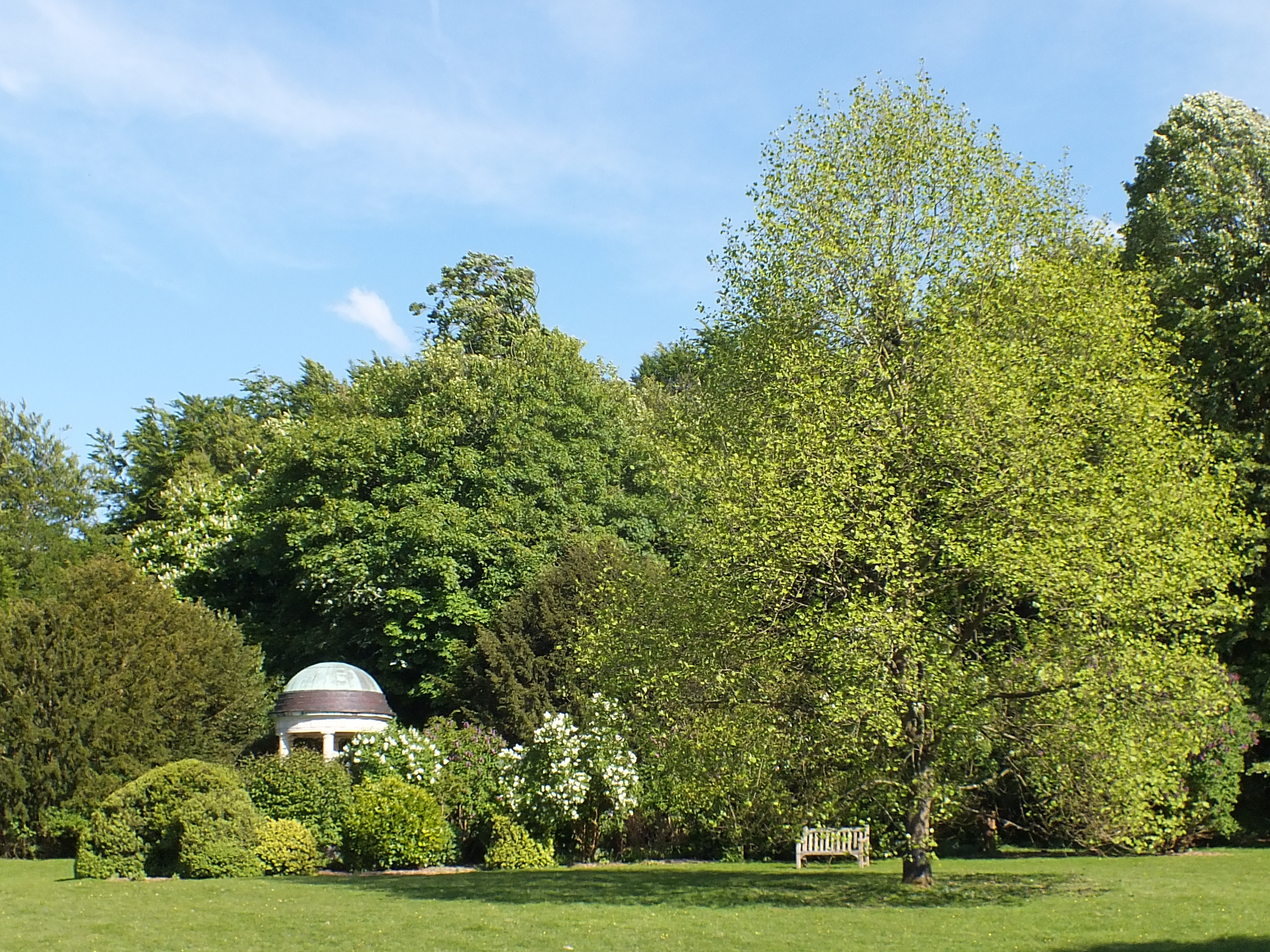
In 1913, Gertrude Jekyll submitted plans for a south and west parterre garden. Only the first was executed and this has been reinstated with shrub and old bush roses, in the company of peonies, geraneums and irises (but it does sit oddly with the surrounding parkland).
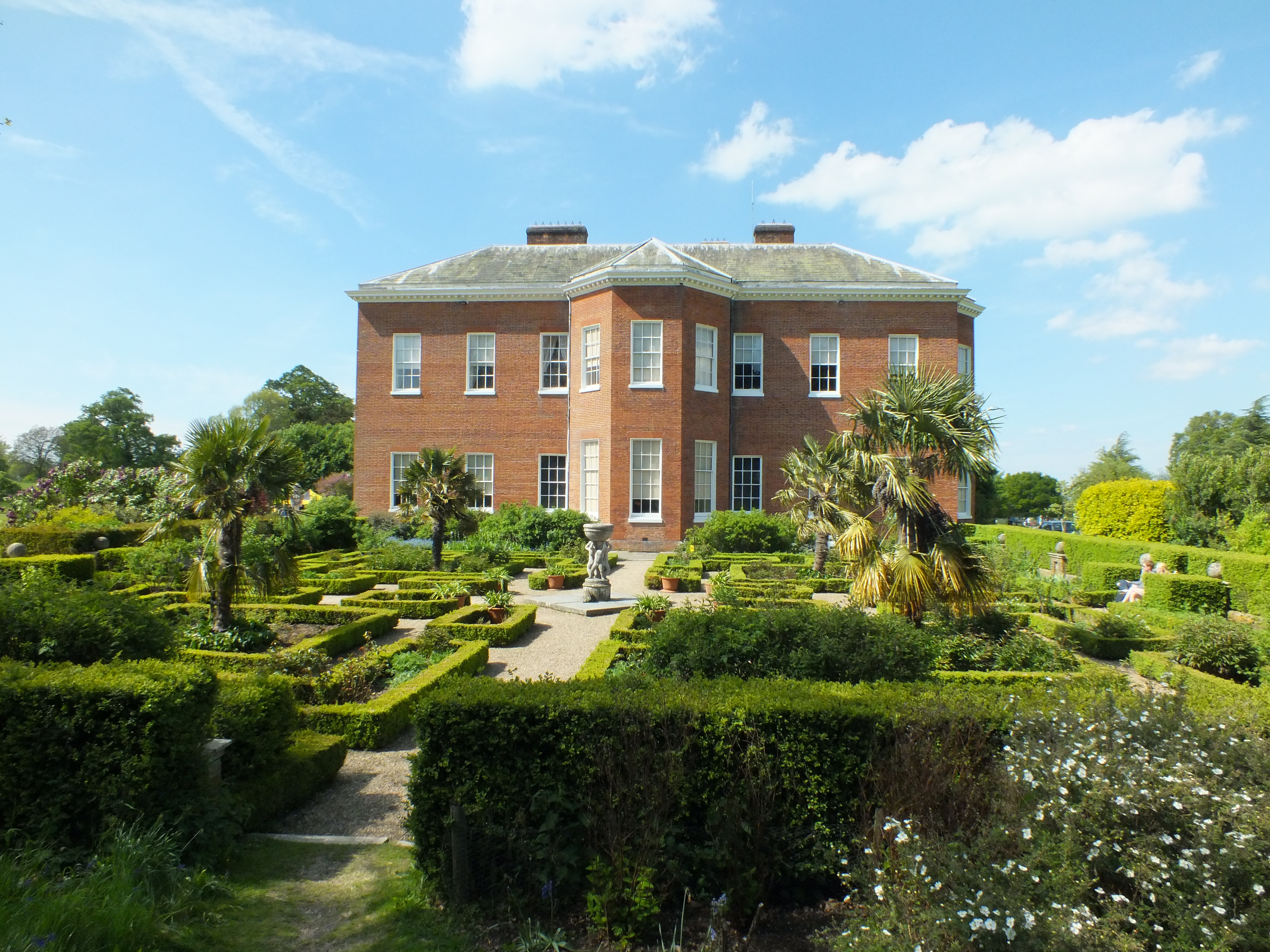
Slowly, after decline seen between 1959 and 1980, when the property was let as a finishing school, the garden has become a fitting accompaniment to the Adam house and interiors.
I should note that these are (almost all) Stephen Lacey’s words from the excellent book Gardens of the National Trust. Also worth a look is The Gardens of Britain & Ireland by Patrick Taylor. A little more history and a home improvement I wish we could all adopt –
“In 1800 Humphrey Repton produced a Red Book in which he recommended moving the London Road further away from the house and making a raised bank planted with trees to conceal the house from the main road and so transforming it ” from a large red house by the side of a road to a Gentleman-like residence in the midst of a Park”
I shall have a word with the neighbours…
For more information on this National Trust property, near Guildford, see:-
http://www.nationaltrust.org.uk/hatchlands-park/


 The Teddington Gardener